You hear the terms transgender and non-binary more and more often. In conversations, on social media, maybe from someone in your own circle. Yet for many people, the terms remain unclear. They are often used interchangeably, even though they do not mean the same thing. That can be confusing. Especially if you are just starting to explore what gender means to you, or if you want to better understand someone else.
In this blog, we calmly and clearly explain the difference between transgender and non-binary. So you understand what the terms mean, why the distinction matters, and how to approach them in a respectful and safe way.
What do we actually mean by gender?
Before we can explain the difference between transgender and non-binary, it is important to first pause and look at the concept of gender itself. It is a word that is often used, but not always explained.
Gender is about how you feel on the inside and how you see yourself. It is about identity. Not about your body. Not about what is written in your passport. Not about what others expect from you.
Many people grow up with the idea that there are only two options: man or woman. That is called a binary gender system. For some people, that fits. For others, it does not. And that is exactly where the terms transgender and non-binary come into the picture.
What does transgender mean?
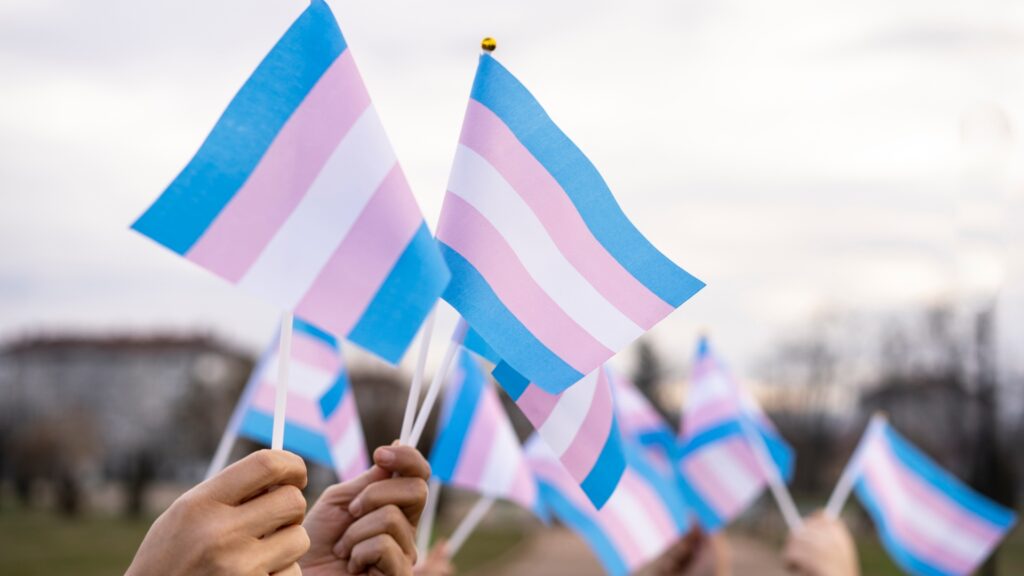
Transgender is an umbrella term. It describes people whose gender assigned at birth does not match how they experience themselves.
Maybe you were labeled female at birth, but internally you feel like a man. Or the other way around. That feeling is not something you invent or choose. It is something that exists deeply within you.
Many transgender people ultimately identify clearly as either a man or a woman. Their gender identity falls within the binary system, but it does not align with what they were assigned at birth.
It is important to understand that being transgender does not automatically say anything about medical steps. Not everyone wants hormones. Not everyone wants surgery. Not everyone changes their appearance in the same way. At its core, being transgender is about identity, not appearance or medical decisions.
What does non-binary mean?
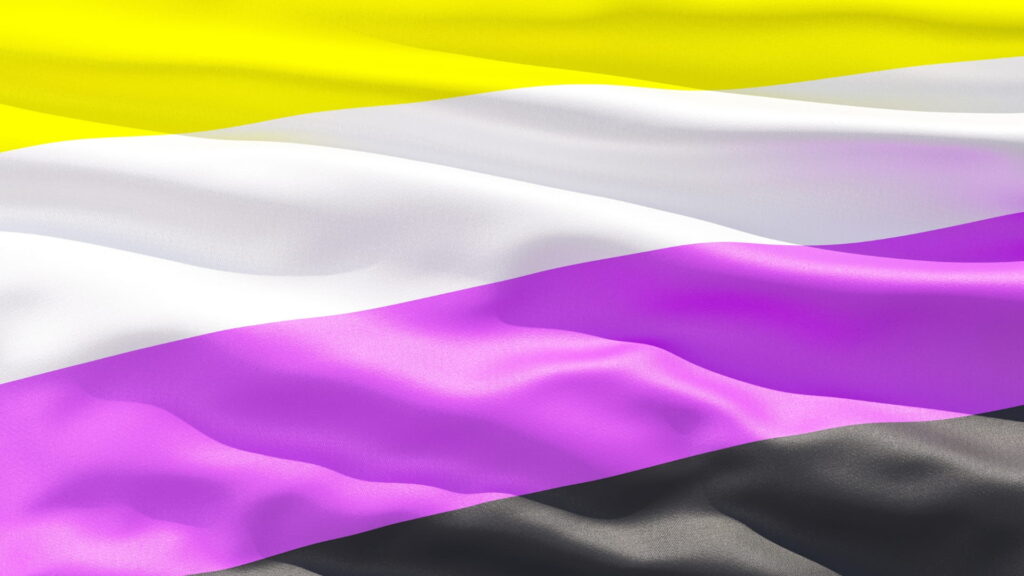
Non-binary means that you do not feel fully male and also not fully female. Or that you feel somewhere in between. Or perhaps completely outside the idea of man and woman.
For non-binary people, the binary system often feels too limited. Two boxes are not enough to describe who they are. Some feel partly male and partly female. Others feel neither. Still others experience their gender as something that can shift over time.
Non-binary is not a phase. It is not confusion. It is a valid identity in itself. Just like with transgender people, there is no fixed path. Everyone experiences it differently.
The difference between transgender and non-binary in short
The difference between transgender and non-binary mainly lies in how someone relates to the idea of man and woman.
Many transgender people move from one binary gender to the other. From female to male, or from male to female. Their identity fits within man or woman, but not with what they were assigned at birth.
Non-binary people do not fully fit within those two options. Their identity lies outside of, in between, or separate from man and woman.
That also means that non-binary people can technically fall under the broader transgender umbrella. However, not everyone uses that word for themselves. And that is important to respect.
Why this distinction matters
You might wonder: why does this difference really matter? The answer is simple. Words matter. They give space to someone’s experience.
If you group transgender and non-binary together as the same thing, you risk making people feel unseen. That their story is being simplified. Or that incorrect assumptions are being made about what they need.
For example, someone who is non-binary may feel uncomfortable being addressed as either man or woman. A transgender man, on the other hand, may find it very important to be recognized clearly as a man. Recognizing that difference helps us treat each other with respect.
What does this look like in everyday life?
In daily life, you often notice the difference in language and expectations.
A transgender woman usually wants to be addressed with she and her. She wants to be seen as a woman. A non-binary person might ask to use they and them, or prefer to avoid gendered language altogether.
You may also see differences in clothing and presentation, although this is never a strict rule. Some transgender people choose a presentation that clearly aligns with man or woman. Some non-binary people prefer a mix, or something that does not fit neatly into either category.
The most important thing is not to assume. It is better to ask, or to listen to what someone indicates about themselves.
Safely navigating gender identity
Respectful interaction around gender identity starts with respect. That sounds simple, but it lives in small actions.
Use the name and pronouns someone chooses for themselves. Even if it takes some getting used to. If you make a mistake, calmly correct yourself without making it into a big issue.
Do not assume you know what someone wants or needs. Not every transgender person wants the same steps. Not every non-binary person feels the same about their body or presentation.
And perhaps most importantly: allow space for doubt and change. For some people, their identity has been clear from a young age. For others, it is a process that takes time.
Practical tips if you are exploring yourself
If you are exploring where you fit, it can feel confusing. That is normal.
Try not to rush into finding a final label. It is okay to say you do not know yet. You do not have to fully understand yourself today in order to be valid.
Pay attention to what feels right in your body and your mind. How do you feel when someone addresses you as a man or a woman? What happens when that does not feel right? Which words bring calm instead of tension?
Talk about it with people you trust. Or read about other people’s experiences. Not to compare yourself, but to see how many different ways there are to be yourself.
Common misunderstandings
A common misconception is that non-binary means having no gender. That is not always true. Some non-binary people feel a very strong sense of gender, just not male or female.
Another misconception is that being transgender always involves a full transition. That is not the case. Transition looks different for everyone, and sometimes there is no medical aspect at all.
It is also often thought that these are new ideas. In reality, gender-diverse identities have existed for centuries across different cultures. The words may be new to you, but the experiences are not.
Comfort, identity, and the role of supportive products
For some transgender and non-binary people, physical comfort plays a major role in how safe and calm they feel. Gender dysphoria can show up as tension around the chest, hips, or overall silhouette. Not everyone experiences this, but for those who do, it can be present daily.
In such cases, supportive products can help create a sense of control and calm. For example, a binder can safely create a flatter chest appearance. Or specially designed underwear can help align the body’s appearance with how someone feels internally.
At TransUndeez, these products are developed with one key principle: safety and comfort come first. That means breathable materials, a fit that can be worn for longer periods, and clear guidance on safe use. No pressure to change. No expectations. Just options, so you can choose what fits you.
For some people, such a product is a big step. For others, it is simply a practical tool in everyday life. Whatever your situation is, your identity always comes first. Products are there to support you, not to define who you are.
Are you interested in a binder? View all binders here.
Finally
The difference between transgender and non-binary ultimately is not about definitions, but about space. Space to understand yourself in your own way, at your own pace. For some, that means clearly choosing man or woman. For others, it means moving beyond that idea. Both are equally valid.
What many people share, regardless of how they identify, is the need for comfort and safety in everyday life. Feeling at ease in your body can play a big role in that. Sometimes that lives in small details, like how clothing feels or how your silhouette looks.
For some people, a binder can help create more peace within their body. Not as an obligation, not as a step you must take, but as a tool you can use if it feels right for you. Whatever you choose, the most important thing is that it feels safe and aligns with who you are.