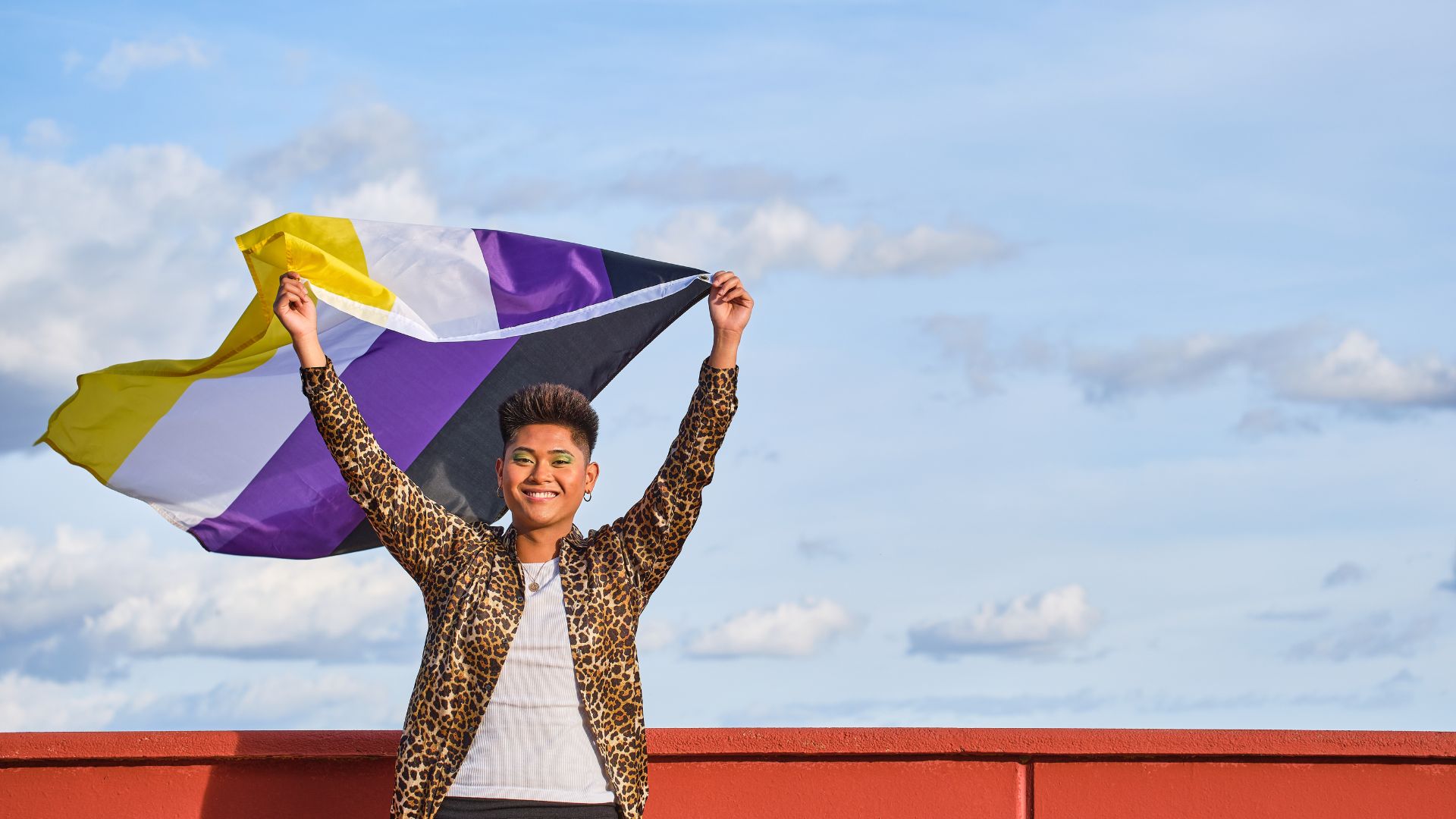
What does a non-binary person look like? You might picture someone with short hair, loose-fitting clothes or an appearance that is not clearly masculine or feminine. The honest answer, however, is that a non-binary person can look like anyone.
Being non-binary is about gender identity. This is how someone experiences their gender internally. Clothing, hairstyle, voice, makeup and body language are all part of gender expression. Gender identity and gender expression can be connected, but they do not have to be. You therefore cannot tell whether someone is non-binary based on their appearance.
Understanding this distinction prevents people from feeling as though they have to fit a particular image. You do not have to look androgynous, change your body or prove anything.
What does non-binary mean?

Someone who is non-binary does not identify exclusively as a man or exclusively as a woman. For some people, this means they feel somewhere between male and female. Others feel connected to both, to neither or experience their gender as something that changes over time.
Non-binary is therefore not one fixed third category. It is a broad term that covers many different experiences. People may also use words such as genderfluid, agender, bigender or genderqueer. Others only use the word non-binary or choose not to use an additional label.
In the blog what is non-binary, you can read more about these different meanings and the distinction between gender identity, sex and sexual orientation.
Gender identity and gender expression are different
Gender identity is about who you are. Gender expression is about how you show yourself to the outside world. It can be expressed through clothing, hair, jewellery, the way you use your voice, your movements and the name or pronouns you use.
Many characteristics are still quickly described as masculine or feminine. A dress is often considered feminine, a beard masculine and a short haircut masculine or neutral. However, these meanings are socially learned. A piece of clothing does not have a gender of its own.
A non-binary person can have a beard and wear dresses. Someone can have long hair and wear makeup without feeling like a woman. Gender expression may say something about how a person wants to present themselves, but it does not automatically reveal their gender identity.
Do you have to look androgynous to be non-binary?
No. Androgyny generally means that someone’s appearance does not clearly fit traditional expectations of masculinity or femininity. Some non-binary people feel comfortable with an androgynous appearance because it better reflects how they experience themselves.
Androgyny is not a requirement, though. A non-binary person can dress in a feminine, masculine, changing or completely individual way. Someone who is immediately perceived by others as a man or a woman can still be non-binary.
Comments such as “but you just look like a woman” treat appearance as evidence and dismiss what someone says about their own identity. You do not have to understand someone’s identity by looking at them. You only have to listen to what they tell you about themselves.
Why can appearance still be important?
Appearance does not determine your gender, but gender expression can still mean a great deal. Clothing or a particular silhouette can help you recognise yourself more easily when you look in the mirror. It may reduce discomfort or create a feeling of gender euphoria.
Gender dysphoria is the discomfort that can occur when your body, the way other people see you or society’s expectations do not align with your gender. Gender euphoria is the positive feeling that can arise when something does feel right. This might come from a new haircut, different underwear or someone using the correct pronouns for you.
Not every non-binary person experiences dysphoria. Experiencing dysphoria is also not a requirement for being non-binary. Some people change their appearance mainly because it brings them enjoyment or because they are curious to explore what feels right.
Gender expression is allowed to change
An outfit that felt right yesterday may suddenly feel wrong today. That does not mean someone is uncertain about their identity. Everyone adjusts their appearance depending on the situation, their mood and what feels comfortable.
You are allowed to experiment, reconsider a choice and discover that a certain style only feels comfortable in a safe environment. You may also decide that your appearance plays very little part in how you experience your gender.
Practical ways to experiment with your appearance
You do not have to replace your entire wardrobe immediately. Start with small changes and pay attention to how those changes make you feel.
Look at shape and fit
The shape of a garment often has more influence on your appearance than the gender label attached to the department where it is sold. A straight-cut shirt, high-waisted trousers, wide-leg trousers or a fitted top can all change your silhouette. Also pay attention to whether you can move and breathe freely.
Start somewhere you feel safe
You can experiment at home, around friends you trust or in a place where you feel less observed. You could take photographs for yourself. The purpose is not to check whether you look “non-binary enough”, but to notice which appearances help you recognise yourself.
Pay attention to your own feelings
Do not only ask yourself whether something looks good. Do you feel calmer, relieved or happy when you see yourself this way? Would you like other people to see you this way as well? You do not need to have a clear answer immediately.
Creating a flatter silhouette with a binder
Some non-binary people want to make their chest less visible. A binder can help create a flatter silhouette. Not all non-binary people wear binders, and using one says nothing about how valid someone’s identity is.
Safe use is important. Choose the correct size and do not wear a binder that is too small in an attempt to create more compression. Stop using it if you experience pain, shortness of breath, tingling or dizziness. Do not use bandages or improvised materials to tightly compress your chest.
In what is safe binding, you can read more about using a binder safely. You can also look at the different TransUndeez chest binders to compare fits and designs.
Packing as a form of gender expression
Packing means wearing a packer to create a different shape around the crotch underneath your clothes. For some non-binary and transmasculine people, this can feel affirming. It may reduce discomfort, create a preferred silhouette or simply make certain clothes feel more comfortable.
Not everyone wants to create a visible shape. Some people only wear a packer at home, others wear one every day and some do not want to use one at all. There is no correct way to approach packing.
Regular underwear does not always keep a packer securely in place. Packer underwear contains a specially designed pocket or holder that can help keep the packer stable while you move. Choose a size that fits securely without feeling restrictive and take your time to see how it feels while walking, sitting and cycling.
A packer is not a required part of having a more masculine appearance. It is a tool that you only need to use when it adds something positive to your life.
Can you tell which pronouns someone uses by looking at them?
No. Pronouns cannot reliably be determined from someone’s clothing, hair or physical characteristics. An androgynous person does not automatically use they or them. Someone who looks feminine may use they or he. Someone who looks masculine may use she.
When you do not know someone’s pronouns, you can use their name or calmly ask them. If you make a mistake, correct yourself briefly and continue the conversation.
There is no single non-binary appearance
The question “what does a non-binary person look like?” often comes from genuine curiosity. A problem arises, however, when we turn one particular appearance into the recognisable image of being non-binary. Many people are then excluded from that image once again.
Non-binary people differ in age, skin colour, body type, culture and personal style. Some are open about their identity. Others only tell a few trusted people or do not disclose it at all, for example because of their safety, work or privacy.
Research into the number of transgender and non-binary people does not always arrive at the same percentage. Definitions, age groups and the wording of questions differ between studies. The figures do show that transgender and gender-diverse people form a meaningful part of the population. You can find more context in how many people are transgender? Figures and facts explained.
Statistics can improve visibility, but they do not determine whether an individual deserves to be taken seriously.
You do not have to look recognisably non-binary
Perhaps you are reading this because you are wondering what you are supposed to look like. The answer is that you do not have to imitate anyone. You are allowed to explore which clothes, name, pronouns and supportive products make you feel more comfortable. You may want to change certain things while leaving other things exactly as they are.
A binder, packer, haircut or outfit can support you, but it does not make you more or less non-binary. Your identity does not become invalid when other people misread you. Appearance never tells the entire story.
Being non-binary has no fixed appearance; what matters is what feels right for you
What does a non-binary person look like? Like themselves. Sometimes androgynous, sometimes masculine, sometimes feminine and often in a way that cannot be neatly described using a single word.
Gender expression can help you recognise yourself, reduce discomfort or enjoy the way you present yourself. At the same time, you do not have to wear particular clothes, change your body or explain yourself in order to be taken seriously.
Give yourself space to experiment and discover what works for you. The goal is not for other people to immediately recognise that you are non-binary. The goal is for you to be able to live more freely in a way that feels right.